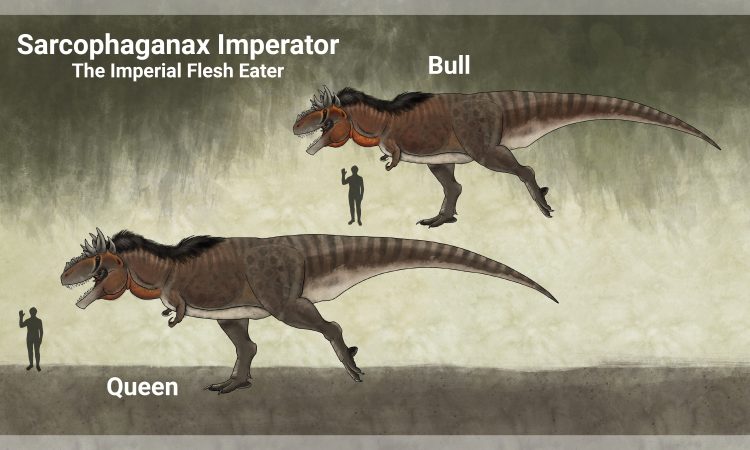
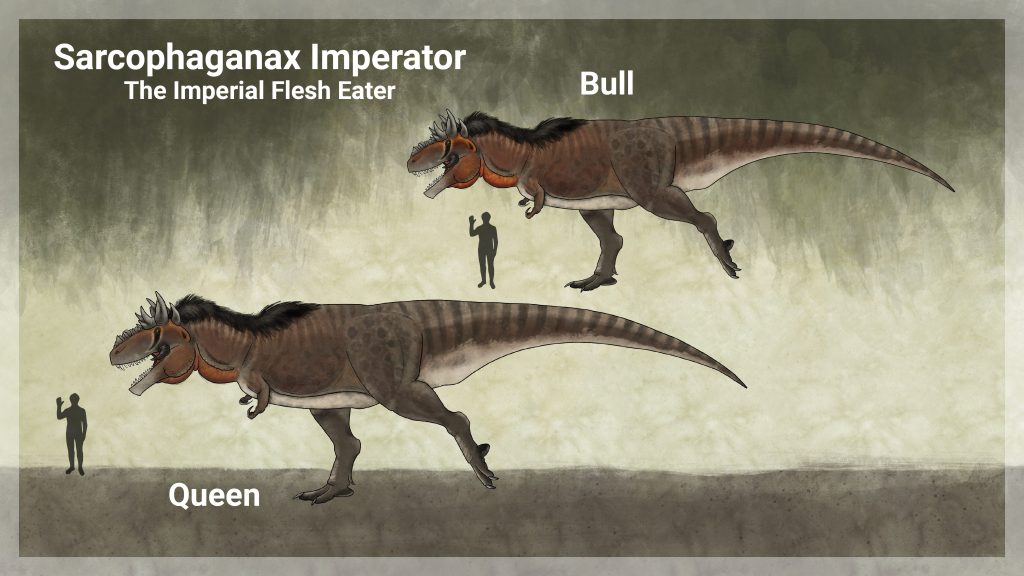
Sarcophaganax is the apex predator of most environments in Subterramundus. This genus dominates open forests and has numerous species spread throughout the reaches of Subterramundus.
The biggest species is S. impterator at up to 16 meters in length and over 12 tons in weight. Females are usually bigger
While males of the genus sarcophaganax are solitary and territorial, females are nomadic and wander vast distances to find food and ensure genetic diversity for her offspring. Males frequently claim their territories by battling older regents which can leave both scarred and battered. Once established, a bull will mark and maintain his territory by leaving scent marks, scratch marks and dung heaps in a wide range throughout the area. He will back up his claim with deep booming calls that travel for many miles through the forest. This acts as a warning to rival males and an allurement for passing queens.
Females that find a territory holder attractive will settle down for a while until they build a mound of dirt, dung and rotting foliage in which to incubate their eggs. Once her eggs are laid, the queen will leave to let the male deal with the offspring. It will be his responsibility to feed them, teach them to hunt and protect them from the many threats that can befall a young theropod.
Adolescent males will occasionally stay with their father, and when he mates again, they will help raise the new generations.
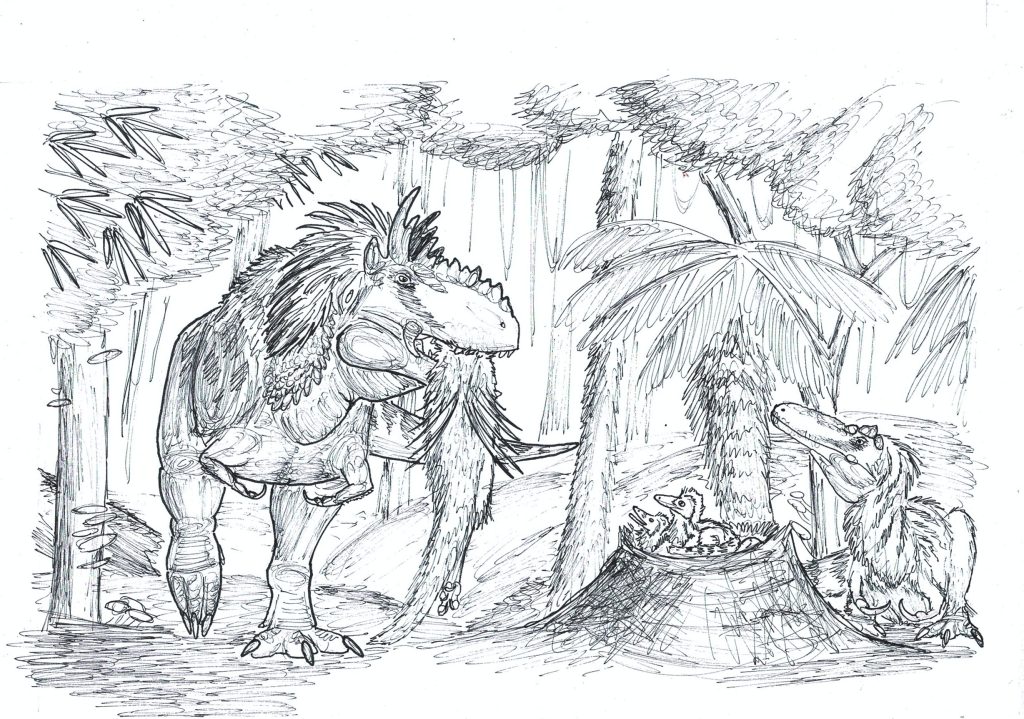
Juvenile sarcophaganax look quite different from their parents. For the first few years of their life, the small fluffy baby tyrants eat nothing but meat brought by their fathers and stray insects that wander into their nest. At this stage in their lives they are highly vulnerable and can fall prey to all sorts of nest raiders. For this reason, older siblings will occasionally help guard their father’s nest and even provide food for the younglings. For those with no older siblings to guide and protect the young tyrannosaurs, the responsibility of providing food for the young falls entirely on the father. As a multi-ton giant, taking care of several cat-sized children can be a daunting process, especially when it comes to defending their offspring from small nest raiders that are faster than the adult and powerful enough to confidently take down a chick.
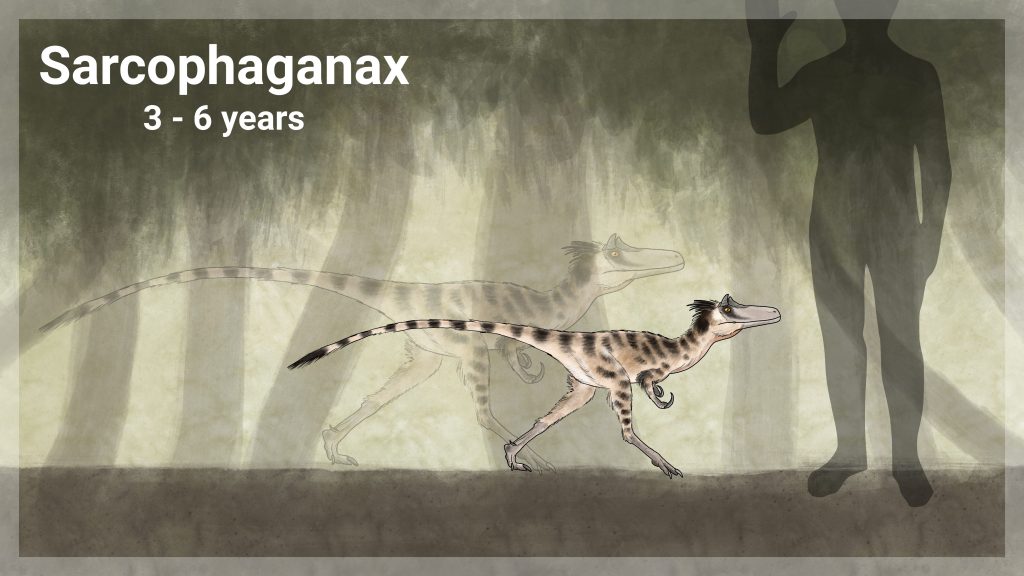
As soon as they can run and catch small animals, typically one to two years old, young sarcophaganax accompany their father who provides food and the opportunity to learn how to hunt. At this stage in their lives the young tyrants can only hunt small game like multituberculates and hatchling dinosaurs.
Occasionally, overconfident young will leave their father’s care at just three years old to try to fend for themselves.
Without sufficient care or teachings from parents or siblings, these young tyrants enter a scavenging phase where they pick carcasses clean of any scraps that larger theropods cannot get to. Within this phase, every inch of length and muscle counts for an individual to be able to establish themselves at a feeding site. These tyrants often end up growing slowly and scrawny and almost always end up getting picked off by various predators.
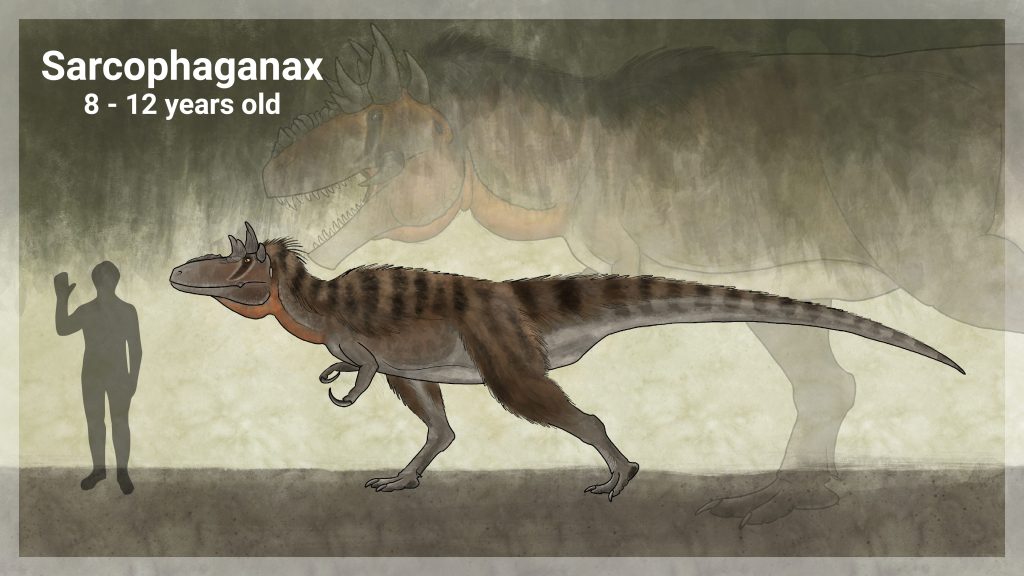
The tyrannosaurs that remain under their father’s or siblings’ care grow far quicker and stronger than those who leave prematurely.
At around five years of age, the young tyrants grow big enough to hunt larger animals such as young thescelosaurs and ornithognathids. At this age they are well prepared to survive on their own and learn to tackle difficult prey by themselves. Indeed most sarcophaganax leave their father’s care at around five or six. As they continue to grow, the young tyrants explore new food options and experiment with new methods of tackling prey.
At eight to ten years of age the young tyrannosaurs approach sexual maturity. Due to the large amount of food they need to reach their full adult size, many will abandon their hunting companions and become solitary. Those that remain with their fathers up until this point are driven out of the territory or even killed. At this age their skulls widen to make room for their binocular vision and massive jaw muscles.
Sarcophaganax enter adulthood at 20 years of age. This is also the age at which their horns come in. Feature scales on the neck form a thick bundle of spikes that protect the neck from the blows of their dangerous prey. The juvenile fluff is almost entirely gone save for a bushy mane that serves to cool the giant theropod in the humid environment of Subterramundus.
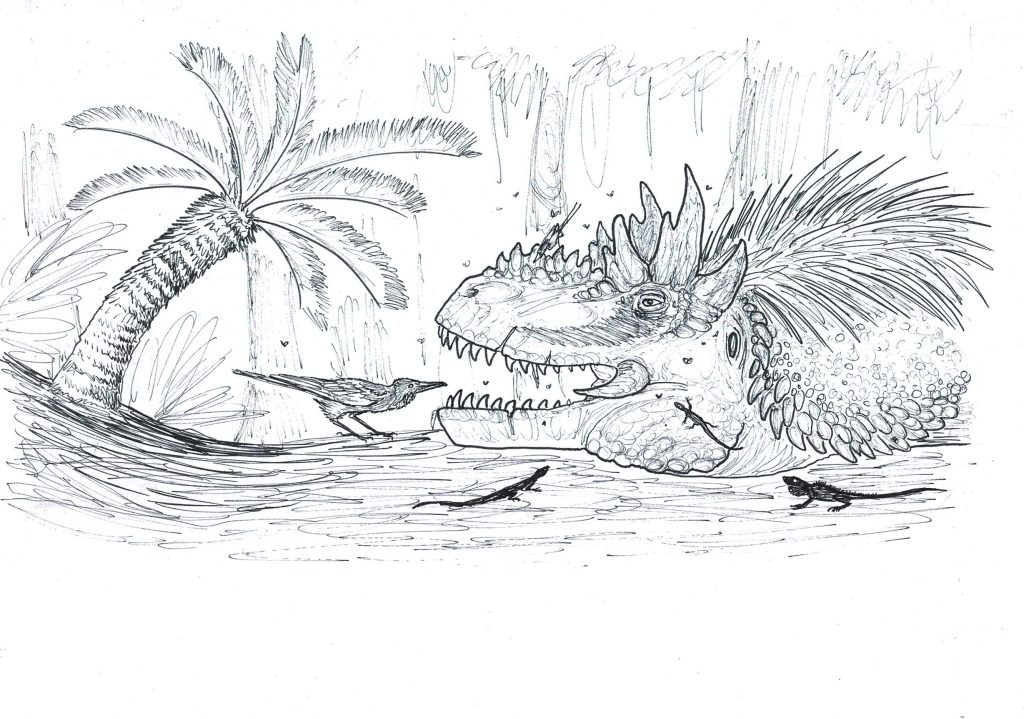
Most of an elder bull’s time is spent resting to recover from, or gather energy for a hunt. As they lie there, they become a feeding hotspot for smaller organisms such as insects, lizards and small birds.
Sarcophaganax are capable of short bursts of speed of nearly 30 kph /18 mph, although they prefer a leisurely stroll to let the prey exhaust itself before going in for the kill.
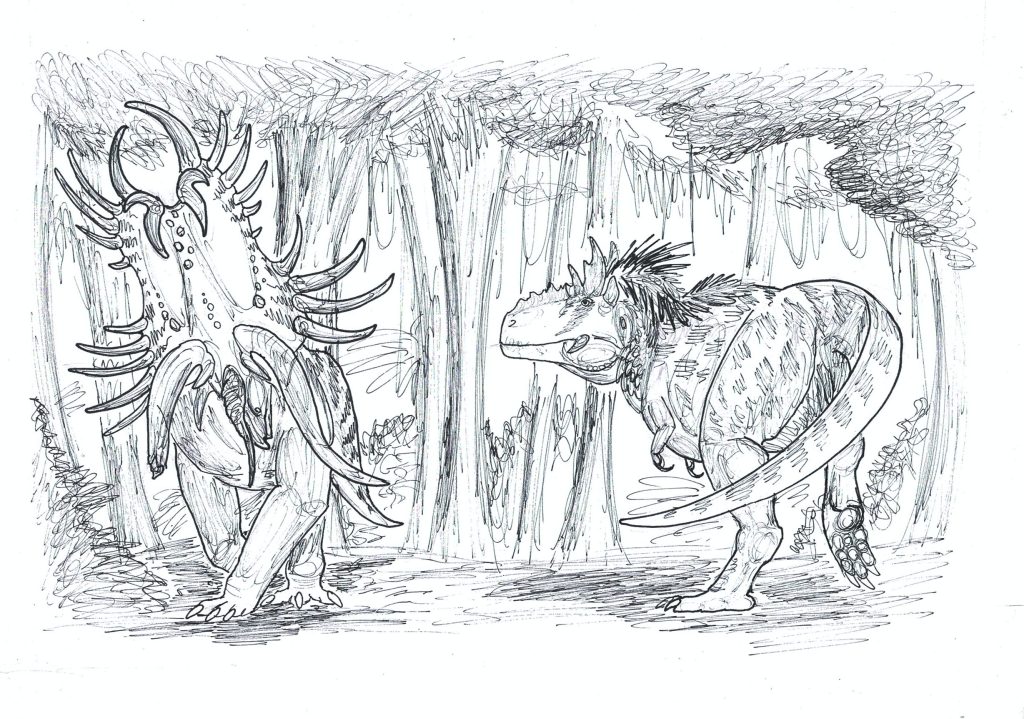
When the time comes for a confrontation, sarcophaganax employ their short yet powerful arms to get a grip onto their prey before using their impressive bite force to break limbs or rip out the throats of their prey. But some animals are extremely difficult even for a fully grown tyrant to tackle.
Giant ceratopsians, thescelosaurs and sauropods are more than capable of standing up to the giant theropods. More often than not, an attempted hunt ends in failure.