Introduction to Subterramundus
This video provides a basic overview of how Subterramundus functions.
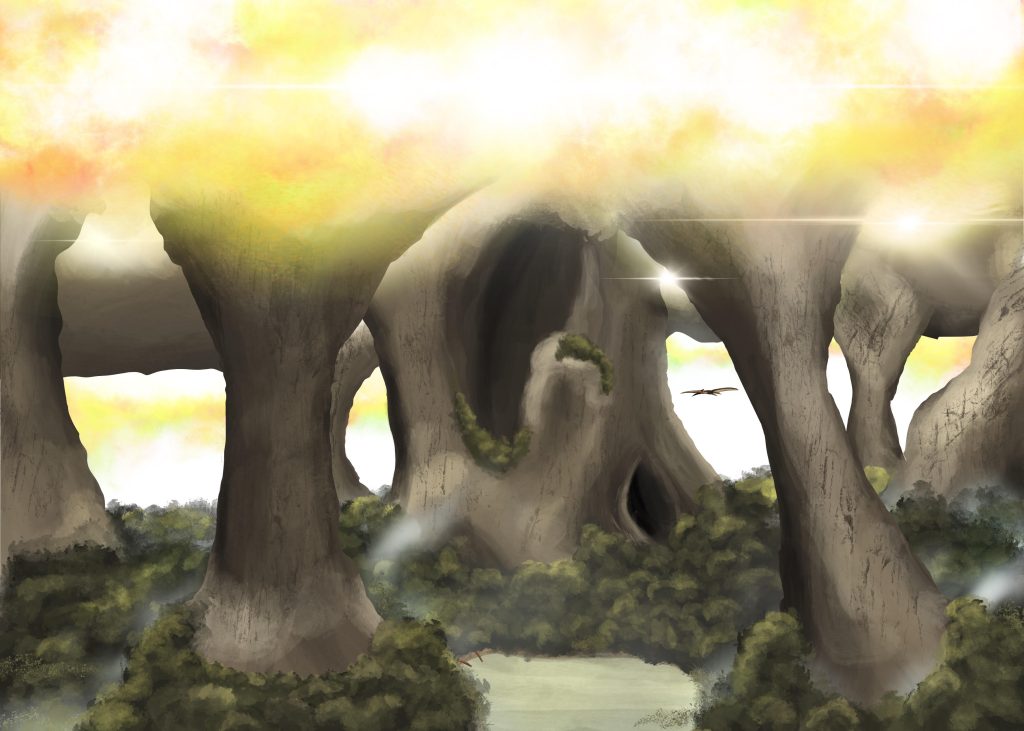
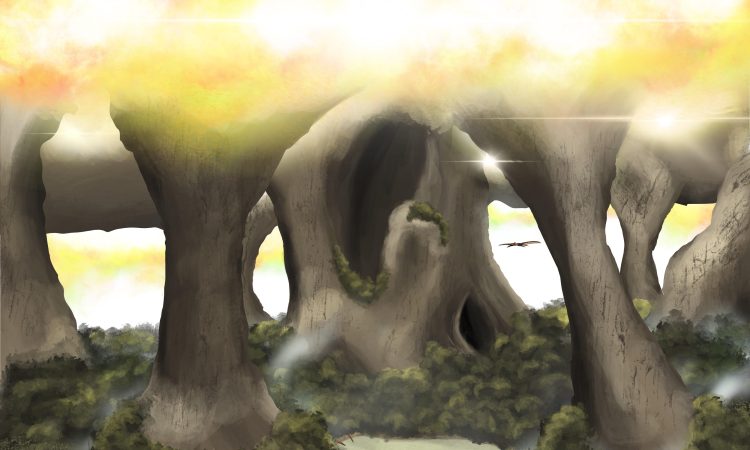
Subterramundus is a system of caves, tunnels and cavers stretching across all of the major continents and even lesser islands. The largest of these caves are lit by an unknown gaseous element which shares many properties with our sun, such as immense heat and bright light. This allows plants and animals to flourish as they would in the light of a true sun. This element is also attracted to the moon’s gravitational pull meaning the days of Subterramundus are in synch with the tides on the surface. This results in a 12 hour day/night cycle.
The caverns and tunnels that form Subterramundus are populated by flora and fauna descended from taxa that arrived from various points in time dating back to the end of the Triassic. These taxa arrived through entrances spread across the world including (but not limited to) Australia, Africa, Asia, Europe and North and South America.
The major influx events occurred during the early Jurassic, Early and End Cretaceous, Miocene, Pliocene and Holocene. Smaller, less impactful influxes have also taken place between the larger ones.
Once all these plants and animals find their way into this hidden world, they are cut off from the surface and are free to evolve along a new path independent of their relatives on the surface.
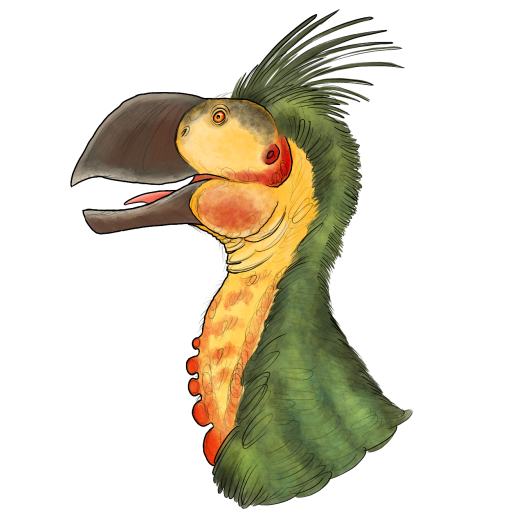
Now, millions of years later, the various taxa that found their way into this hidden world have evolved into a plethora of new families and species. Million of species call Subterramundus their home, from microbes and fungi, over insects and fish, all they way to dinosaurs and enormous trees. Each one plays its own unique role in the health of its particular ecosystem.